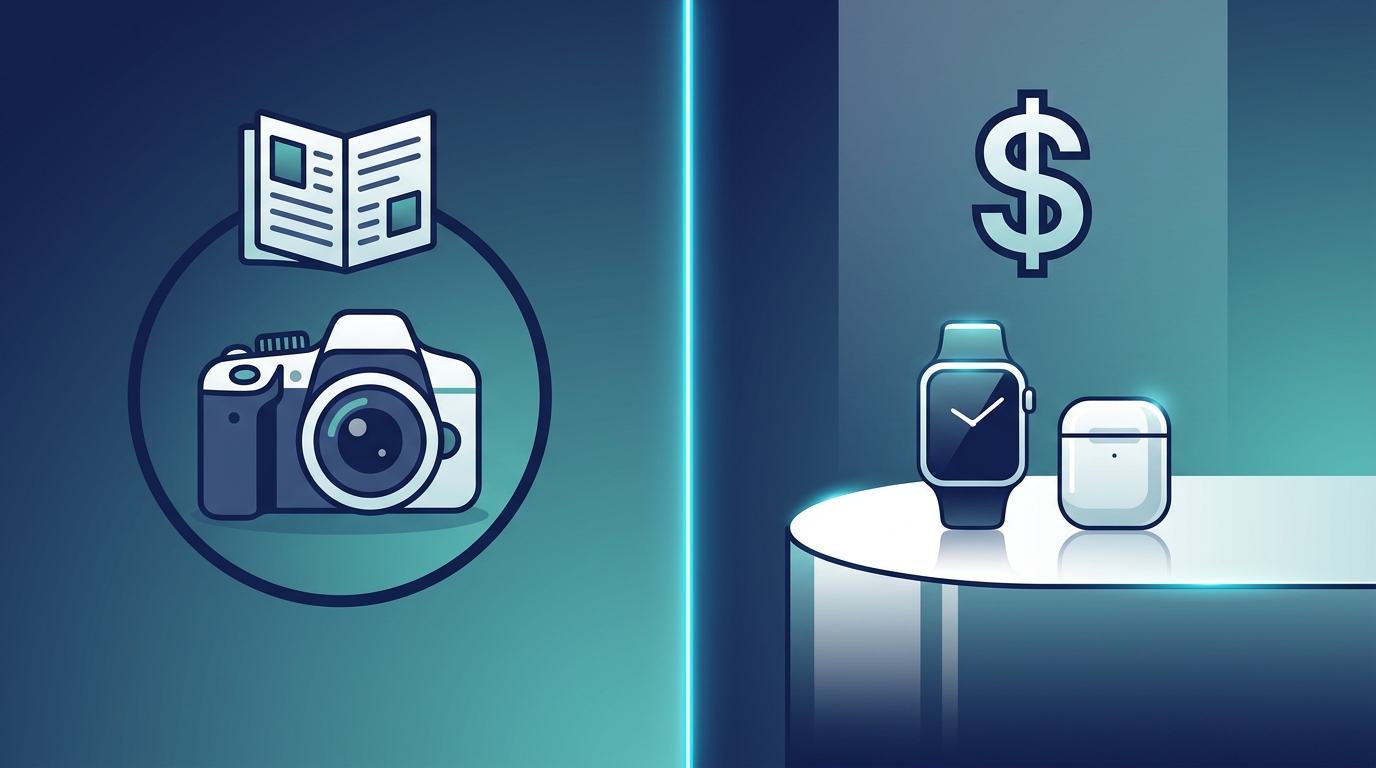
When you upload an image or video to a stock agency like Adobe Stock or Shutterstock, you are asked to make a crucial decision: Is this asset Commercial or Editorial?
Selecting the wrong license type can lead to instant rejections, account warnings, or even legal issues down the line. Yet, many new contributors struggle to understand the boundary between the two.
In this guide, we will break down the fundamental differences between Commercial and Editorial licenses, explain the rules of model and property releases, and look at how this choice impacts your sales and workflow.
The Core Difference
At its simplest, the distinction between Commercial and Editorial licensing comes down to how the buyer will use your content.
What is Commercial Use?
Commercial use means the image or video will be used to promote, market, sell, or advertise a product, service, brand, or business.
Examples of commercial use include:
- Advertisements (digital, print, TV, social media ads)
- Corporate websites and product landing pages
- Marketing brochures and flyers
- Product packaging
- Sponsored blog posts and brand campaigns
Because commercial buyers are using your content to make money or build brand value, commercial assets require the highest level of legal clearance. Every recognizable person, trademark, and private property in the image must be explicitly cleared for use.
What is Editorial Use?
Editorial use means the content will be used to illustrate news, educational material, public interest stories, or informational articles.
Examples of editorial use include:
- News broadcasts and newspaper articles
- Educational textbooks and academic articles
- Non-commercial blogs and news portals
- Documentaries and informative podcasts
Because editorial content serves the public interest and is protected under freedom of speech and press principles, editorial assets do not require model or property releases. However, they cannot be used for any promotional or advertising purpose.
Understanding Releases: The Rules
To sell an image or video under a Commercial license, you must provide proof of consent for anything recognizable in the frame. This is done through releases.
1. Model Releases
A Model Release is a legal document signed by the subject of your photo or video (or their parent/guardian if they are under 18) granting permission to use their likeness commercially.
- When is it needed? Any time a person is recognizable. This includes faces, but also unique tattoos, profiles, distinct hairstyles, or even body shapes in context.
- What happens if you don't have one? The asset can only be submitted as Editorial.
- Rule of thumb: If a person's friends or family could look at the photo and say "that is you," you need a model release.
2. Property Releases
A Property Release is a legal document signed by the owner of private property, granting permission to use images of that property commercially.
- When is it needed? For recognizable private property, including unique modern architecture, private estates, museums, amusement parks, and luxury boat/car interiors.
- Trademarks and Logos: Commercial assets cannot contain visible brand names, logos, or trademarked designs. This includes the Nike swoosh, Apple logo, car manufacturer badges, or even protected product designs (like the shape of an iPhone).
- What happens if they are present? You must either clone them out using Photoshop/Lightroom (highly recommended for commercial licensing) or submit the photo as Editorial.
When to Shoot Editorial vs. Commercial
As a contributor, how do you decide which path to choose for a shoot? Here is a breakdown of when each category shines.
When to Choose Commercial (The Money Maker)
Commercial stock is where the vast majority of stock photography sales happen. Advertisers and businesses have much larger budgets than editorial writers.
Shoot Commercial when:
- You are shooting in a controlled environment (studio, home, private property with permission).
- You are working with hired models who have signed releases.
- You are shooting generic concepts (e.g., "business meeting," "healthy cooking," "fitness tracker") where brands can be hidden or removed.
- You want the highest possible royalty rates and sales volume.
Internal link opportunity: Need a strategy for building a high-paying commercial portfolio? Read our guide on how to build a profitable stock portfolio from scratch in 2026.
When to Choose Editorial (The Creative Freedom)
Editorial licensing allows you to capture the world as it is, without needing to clean up logos, hide trademarks, or ask strangers for signatures.
Shoot Editorial when:
- You are shooting street photography, public gatherings, protests, or parades.
- You are capturing news, sporting events, or concerts.
- You are photographing landmark buildings, historic locations, or modern architecture where property releases are impossible to obtain.
- You want to capture authentic, candid moments that cannot be staged in a studio.
Earning Potential: Commercial vs. Editorial
It is a common myth that editorial content does not sell. While it is true that individual commercial sales often command higher prices (and have larger overall market share), editorial content has its own unique advantages:
- Lower Production Time: You do not spend hours cloning out tiny logos or chasing models for signatures. You shoot, edit, and upload.
- First-Mover Advantage on News: If a major public event or product launch happens, editorial contributors who upload their footage first can make massive quick sales to news outlets.
- Less Competition on Specific Subjects: A search for "Apple Store front" will yield very few commercial results (due to trademark restrictions), but high-quality editorial images of it will be in constant demand by tech blogs.
However, for passive, long-term income, commercial content remains the gold standard. Buyers looking to promote their businesses will license commercial assets thousands of times over, whereas news articles usually license an editorial image once during the news cycle.
Streamlining Your Upload Workflow
No matter which license you choose, optimizing your metadata is key to getting discovered.
Editorial images require highly factual, descriptive titles (often including the location and date, e.g., "LONDON, UK - JUNE 15, 2026: Crowds crossing Tower Bridge during rush hour"). Commercial images, on the other hand, benefit from conceptual and keyword-rich titles focused on mood and actions.
Tagging these correctly is vital. If you tag an editorial photo with commercial, buyer-focused keywords like "buy now" or "ad template," it can trigger flags.
This is where SubmitAI can save you hours. SubmitAI's AI engine automatically detects whether your image contains recognizable logos or faces and recommends the correct metadata structure based on your intended license. For commercial shoots, it helps generate clean, search-optimized tags, while for editorial uploads, it formats factual descriptions perfectly.
By automating this metadata process, you can focus on what matters: planning your next shoot. For more details on metadata optimization, read our guide on how to keyword stock photos.
Summary Checklist
Before you hit submit on your next batch of assets, run through this quick checklist:
| Question | Commercial | Editorial |
|---|---|---|
| Are there recognizable faces? | Yes (Requires Model Release) | No Release Required |
| Are there visible brand logos? | No (Must be cloned out or hidden) | Yes (Can remain visible) |
| Is it shot on private property? | Yes (Requires Property Release) | No Release Required |
| Who is the target buyer? | Advertisers, Brands, Businesses | News, Editors, Bloggers, Educators |
| Average earning potential | High (High volume and license rates) | Medium (Niche demand, fast-paced) |
By understanding these rules, you will protect your contributor account, streamline your workflow, and ensure your assets are positioned to earn maximum royalties.